Real-World Example #1: Is It Worth Expanding a Home Solar PV System?

A homeowner applied for an increase in the grid connection capacity for their solar PV system. Once the distribution system operator approved the request, they had to decide whether investing in additional solar panels would actually pay off.
The following example is based on a real simulation carried out in enesim. All identifying information has been anonymised to protect privacy.
The existing solar PV system (5.46 kW) already generates more electricity on sunny days than the household can consume. The surplus electricity is therefore exported to the distribution grid. Over the past 12 calendar months, these exports amounted to 3.6 MWh.
Previously, all surplus electricity could be credited through a virtual battery service. However, following changes to the electricity supplier's terms and conditions, some of these exports are no longer credited during periods of negative electricity prices. Since 1 April 2026, this has affected approximately 384 kWh in this case, representing almost one-fifth of the surplus generated during that period.
Sharing Electricity with a Business Instead of Using a Virtual Battery
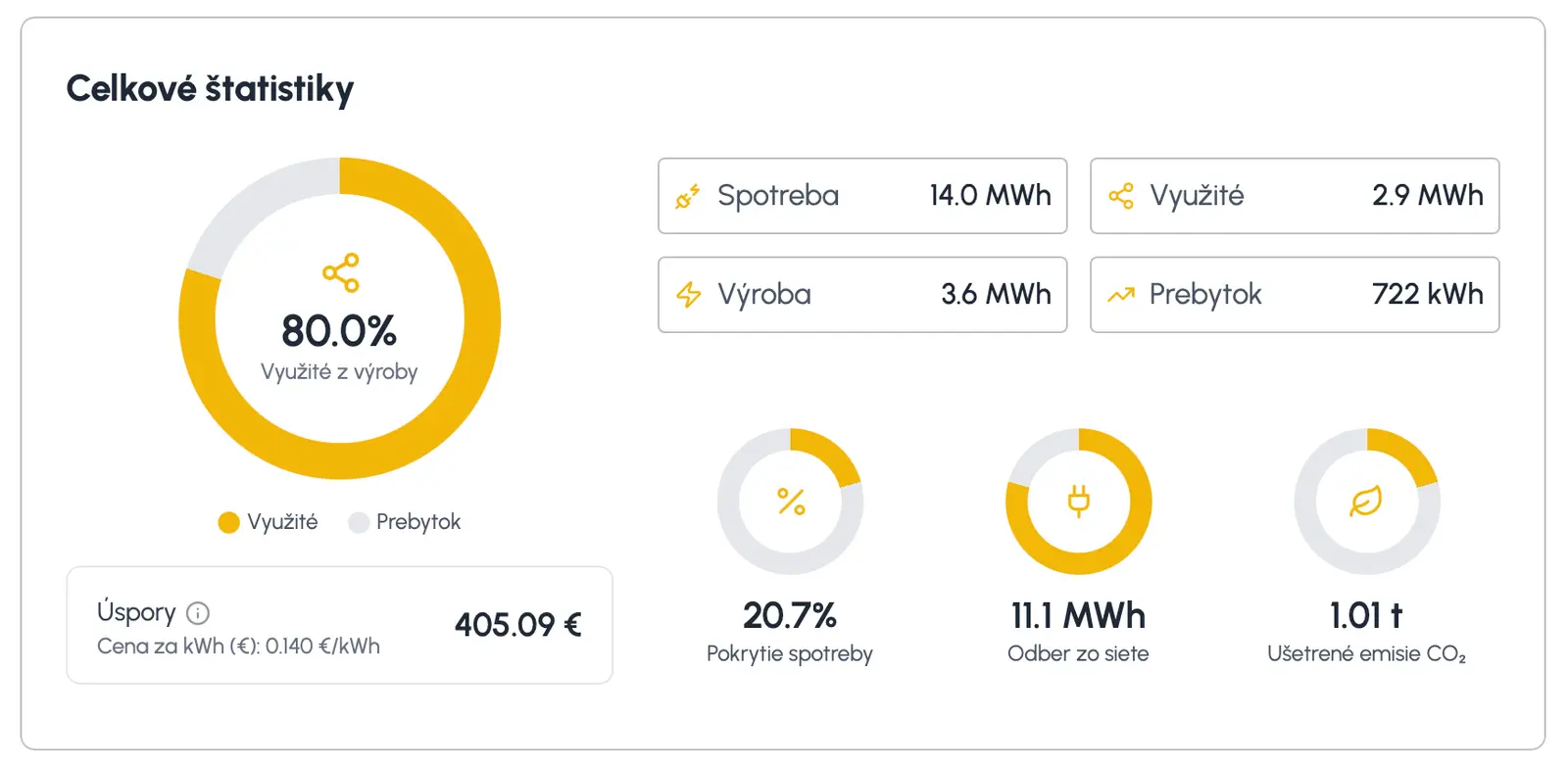
One option was to share the surplus electricity with the PV owner's business through OKTE's Energy Data Centre (EDC). The potential savings for the business were calculated in enesim using a simulation based on 15-minute metering data. The first simulation used the following inputs:
- Surplus electricity from the home's solar PV system (measured electricity exported to the grid).
- Electricity consumption of the business (measured electricity imported from the grid).
The business could use at least 80% of the total 3.6 MWh surplus through electricity sharing. The savings would be reflected in the electricity supply component of the business's bill, based on an electricity commodity price of EUR 140/MWh excluding VAT. Even with electricity sharing, 20% of the surplus would remain unused.
Increasing the Installed Solar PV Capacity of the House
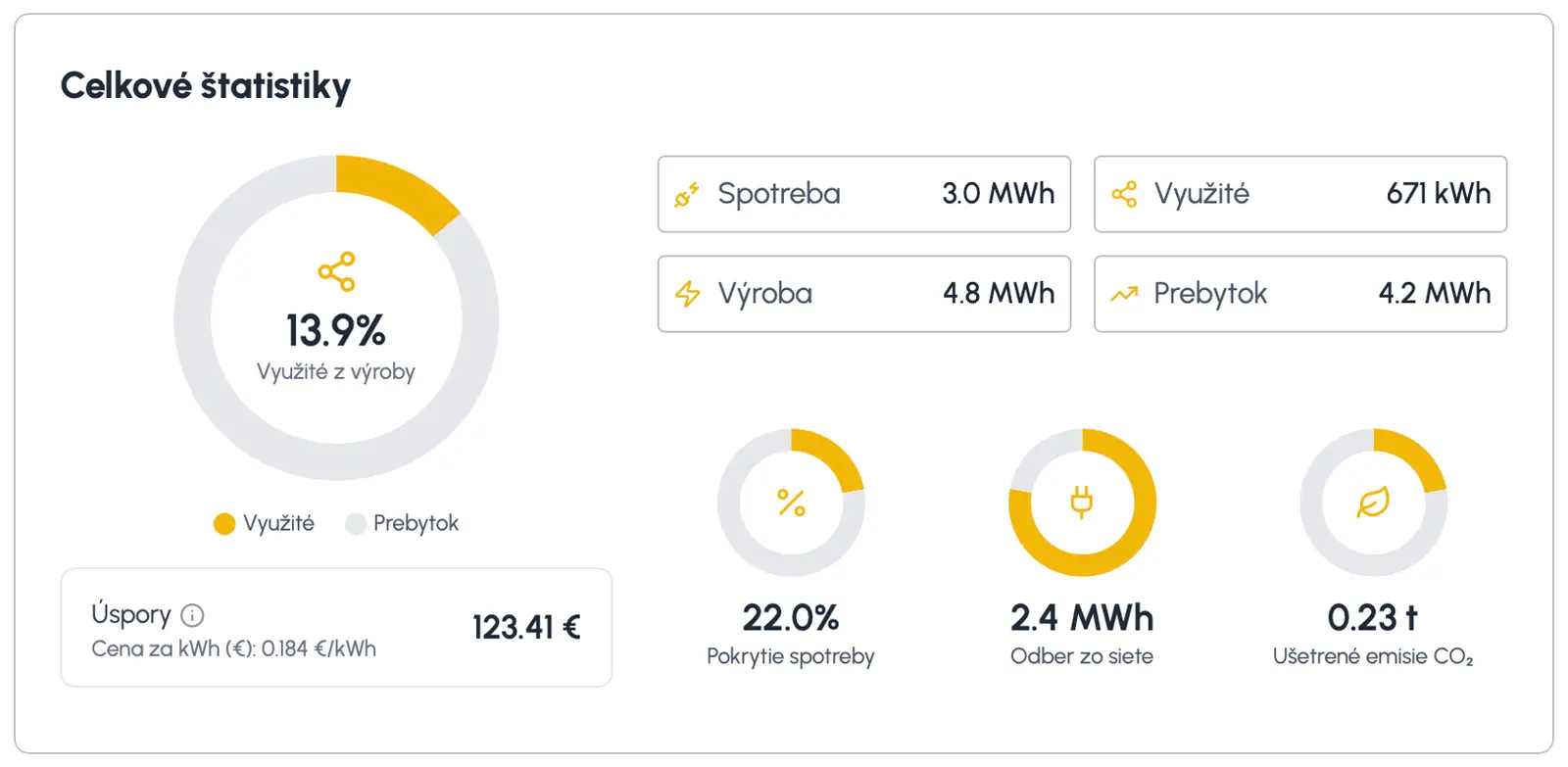
The second simulation examined the potential benefits of expanding the solar PV system for the household itself. In addition to consuming electricity generated by its existing solar panels, the household imports another 3 MWh of electricity from the distribution grid.Increasing the installed PV capacity by 4.54 kW, bringing the total to 10 kW, could help cover part of the household's grid electricity consumption during periods of lower solar generation, such as winter, autumn and unfavourable weather conditions. At the same time, the expansion would likely increase the amount of surplus electricity exported to the grid on sunny days. These assumptions were tested in the second simulation using:
- Electricity generation from the additional solar panels (calculated by enesim using PVGIS).
- Household electricity consumption (measured electricity imported from the grid).
The household would directly consume only 13.9% of the electricity generated by the additional solar panels. The savings would be reflected in reduced electricity imports, lowering all components of the electricity bill, including both the commodity price and regulated charges (a combined value of EUR 184.30/MWh including VAT). The additional panels would generate approximately 4.2 MWh of surplus electricity. Together with the 3.6 MWh surplus from the existing panels, as much as 87% of the electricity generated by the additional capacity would remain unused by the household.
Expanding the solar PV system alone would improve the household's electricity self-sufficiency during periods of lower solar generation. However, it would also increase the amount of surplus electricity requiring an effective way to utilise it.
Expanding the Home Solar PV System and Sharing Electricity with a Business
The final simulation examined the originally proposed solution: a house with an expanded solar PV system combined with a business receiving shared electricity. The third simulation of the electricity sharing group used the following inputs:
- Surplus electricity from the home's existing solar PV system (measured electricity exported to the grid).
- Electricity generation from the additional solar panels (calculated by enesim using PVGIS).
- Household electricity consumption (measured electricity imported from the grid).
- Electricity consumption of the business (measured electricity imported from the grid).
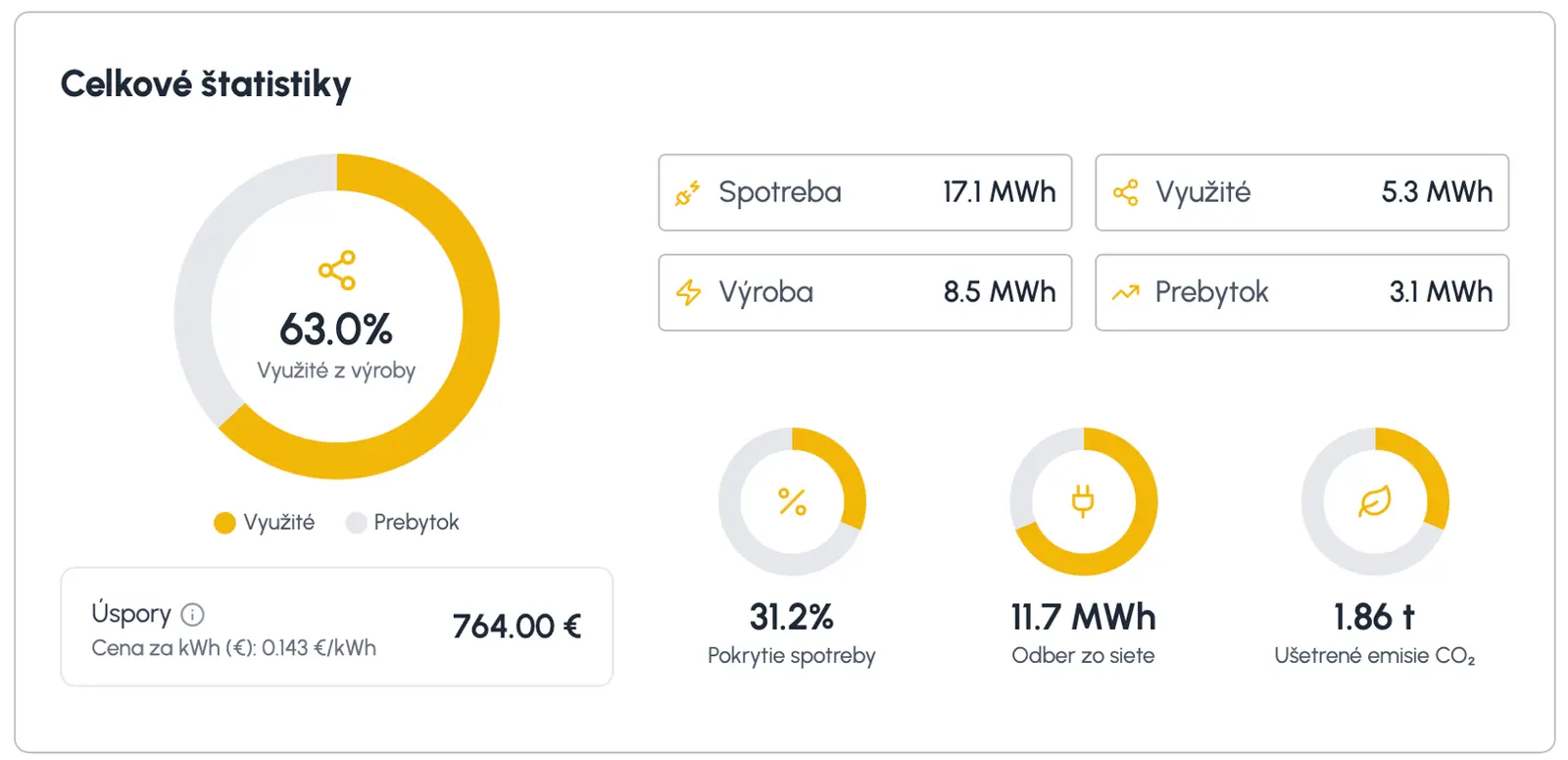
Together, the household and the business would utilise 63% of the existing surplus and the electricity generated by the additional panels. The remaining surplus could be used more effectively by shifting electricity consumption to different times or adding another consumption point to the electricity sharing group. Another option would be to install battery storage, although this would require a higher financial investment.
Making Solar PV Investment Decisions Based on Real Data
The simulations demonstrated that expanding a solar PV system does not automatically lead to greater savings. The key factor is whether electricity consumption occurs at the same time as solar generation. In this case, sharing electricity with the business delivered a significantly better result, as the business could utilise a large proportion of the surplus electricity.
Ideally, such decisions should be made before investing. Simulations based on real 15-minute data can help determine whether it makes more economic sense to expand a solar PV system, share electricity, shift consumption to different times, install battery storage, or combine several of these options.
What Did the Simulations Reveal?
- The existing solar PV system generated approximately 3.6 MWh of surplus electricity per year.
- The business could utilise approximately 80% of this surplus through electricity sharing via OKTE.
- Expanding the solar PV system to 10 kW would generate an additional 4.2 MWh of surplus electricity.
- Combining the expanded solar PV system with electricity sharing via OKTE would increase the utilisation of the electricity generated by the additional panels from 13.9% to 63%.