
What the enesim pilot revealed in Žilina and Pušovce

How does electricity sharing work in real life? Can data help make better decisions about investments in photovoltaics? These were among the questions explored by the PilotInnCities project, in which the enesim application was tested.
Two municipalities, two different stories
When selecting pilot municipalities, two main criteria were applied:
- Level of experience with electricity generation and sharing → The aim was to test and adapt the proposed tool for both beginners and advanced users.
- Affiliation with an electricity distribution company → The goal was to ensure access to original electricity consumption data and standard export formats from the three main distribution companies in Slovakia.
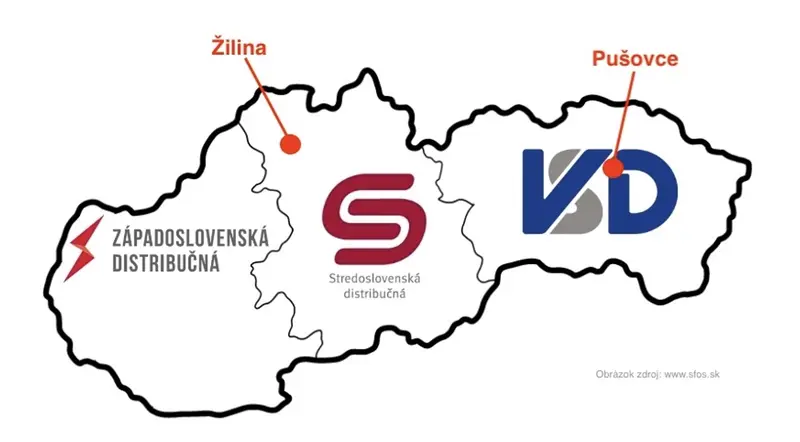
Since the prototype had already worked with data from Západoslovenská distribučná, the pilot locations were chosen within the service areas of Stredoslovenská distribučná and Východoslovenská distribučná. Testing was carried out in cooperation with the following pilot municipalities:
- Pušovce – a municipality that was just starting with energy and electricity sharing.
- Žilina – a city with prior experience in electricity sharing and operating its own photovoltaic sources.
26 simulations of electricity production, consumption, and sharing
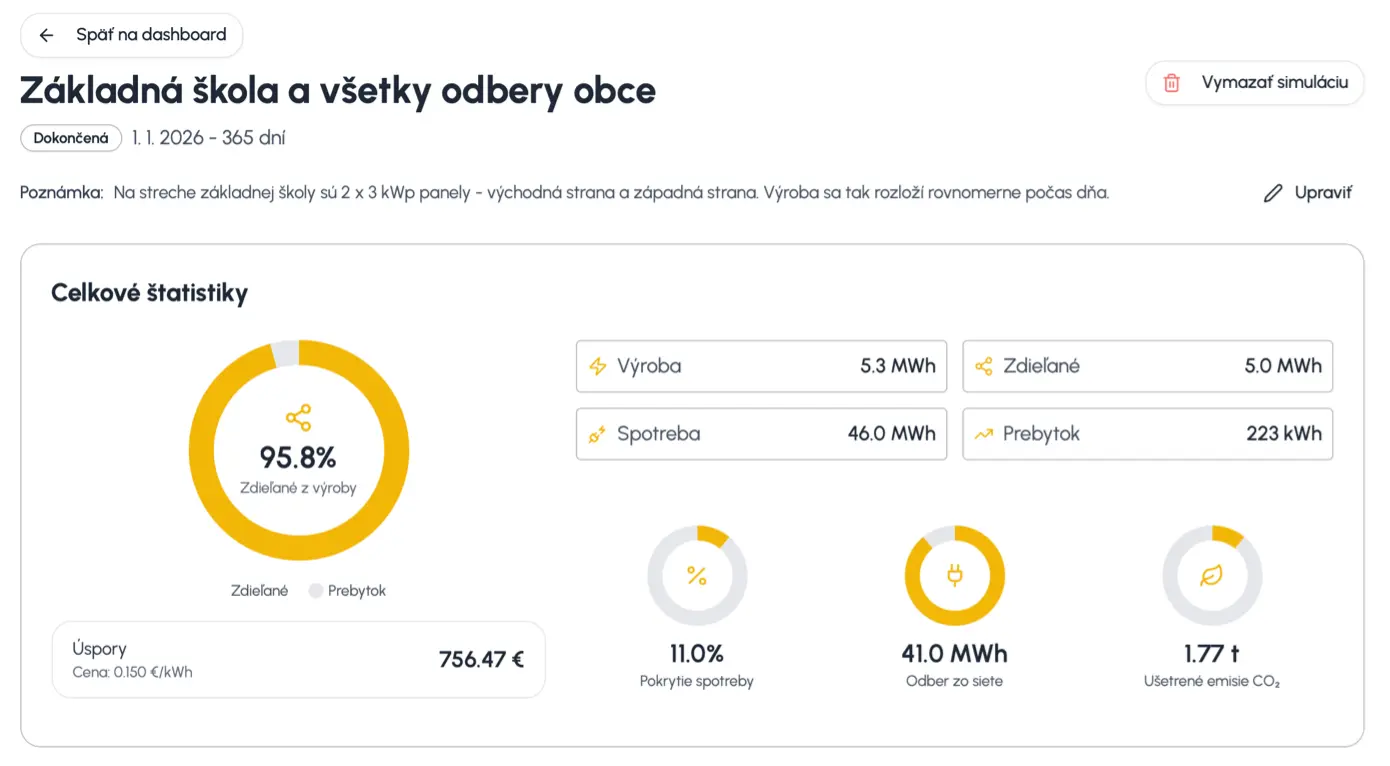
One of the goals of the pilot was to verify whether municipalities could work with simulations independently. A total of 26 simulations of different scenarios were created, including:
- proposals for new photovoltaic sources,
- linking multiple facilities into a sharing group,
- optimization of source capacity,
- utilization of electricity surpluses.
Each simulation helped to better understand how the system works in real life. Scenario-based simulations made it possible to quickly identify where surpluses occur and propose their allocation to other consumption points.
One of the most important findings was that properly configured sharing can significantly increase the utilization of generated electricity. In some cases, it was possible to consume nearly 100% of the produced electricity within the group. This means fewer unused surpluses, higher economic efficiency, and better returns on investments in renewable energy sources.
What municipalities gained from PilotInnCities
One of the most important outcomes was not just the numbers, but the experience. Municipalities confirmed that they can work with data without the need for an external expert, better understand their own consumption and production, and have higher-quality inputs for decision-making.For example:easier comparison of scenarios,clear graphs and statistics,the ability to present results to leadership.What previously took a long time or was unclear has become understandable.

More about PilotInnCities
The call was part of the international project PilotInnCities (Pilot-based Innovation Ecosystems for Smart Cities), implemented under the Interreg Danube Region Programme 2021–2027 and co-funded by the European Union. The call was organized in Slovakia by the Association of Towns and Communities of Slovakia (ZMOS), with organizational support from the Ministry of Investment, Regional Development and Informatization of the Slovak Republic (MIRRI SR).
Image Gallery


